 Business License

Introduction to Automotive Starter Motors
Introduction to Automotive Starter Motors
To transition an engine from a stationary state to an operational state, an external force must be applied to rotate the crankshaft. This action draws a combustible mixture into (or generates it within) the cylinders, where it subsequently combusts and expands, thereby enabling the engine's working cycle to proceed autonomously. The entire process—from the moment the crankshaft begins rotating under external force until the engine begins to idle automatically—is referred to as engine starting.
Electric Starter Starting: This method is characterized by its ease of operation, rapid starting capability, capacity for repeated starting attempts, and suitability for remote control.
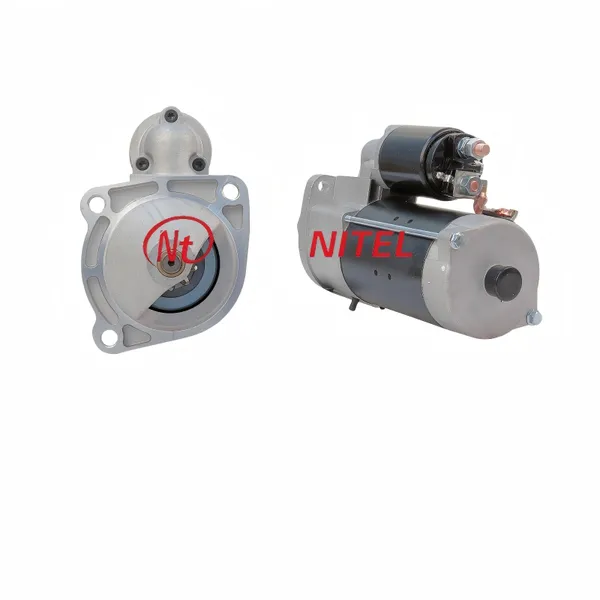
Function of the Starter Motor: To convert electrical energy from the vehicle's battery into mechanical energy, thereby driving the engine's flywheel to rotate and initiate the engine's starting process.
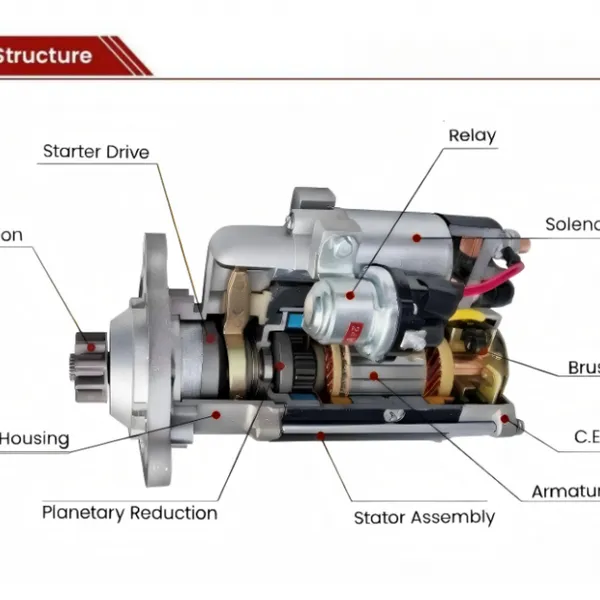
• The starter motor consists of a DC electric motor, a transmission mechanism, and a control mechanism.
• Its primary function is to start the engine.
• Key performance metrics for evaluating engine starting capabilities include: starting torque, minimum starting speed, starting power, and starting limit temperature.


The operating principle of the starter motor can be explained by describing the operating principle of its primary component: the DC electric motor.

Contact Us
Recommended Products
-
 Starter Motor0001416040 24V 5.5KW 9 Teeth Replaces Bosch 0001417036 For Mercedes-Benz Actros Trucks 0986012970 S0538 A0011513901, A0031516601US$ 45MOQ: 20 Pieces
 -
Starter Motor 24V 6.6KW 12T Replaces Bosch 0001417065 For Volvo FH FM NH12 Series 0986017050 0001417075, 0986018090 , 3095060 18392NUS$ 30 - 40MOQ: 30 Pieces
-
Starter Motor 24V 5.5KW 11T Replaces Bosch 0001416005 0001416070 For Volvo FH FL FM Series Truck MAN 51262017029 18931N VOLVO Renault 5010217215US$ 45MOQ: 20 Pieces
-
Bosch Starter Motor 0001368309 24V 4.0KW 9T for Mercedes OM353 Truck 0001368024 A0011517301, A0011519601 A0041517301 18371NUS$ 45MOQ: 20 Pieces
-
Deutz Starter Motor 12V 2.4KW 9T CW 0001362305 Fits Deutz-Farh 1163669, 1164668, 1164994, 1173240 KHD01174166US$ 45MOQ: 20 Pieces
-
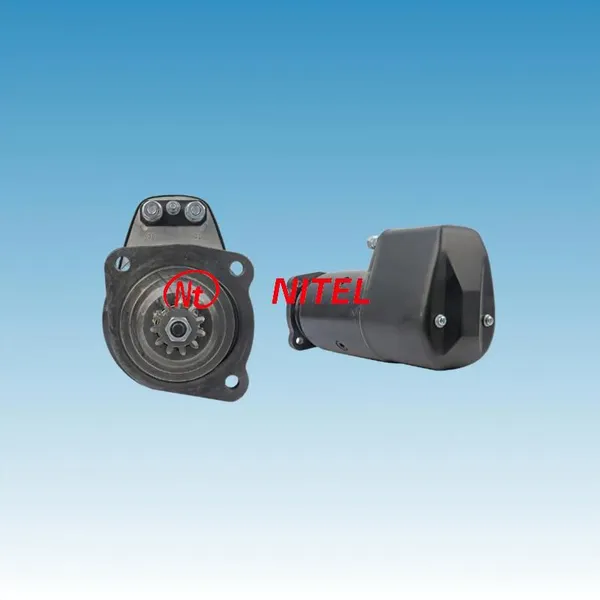
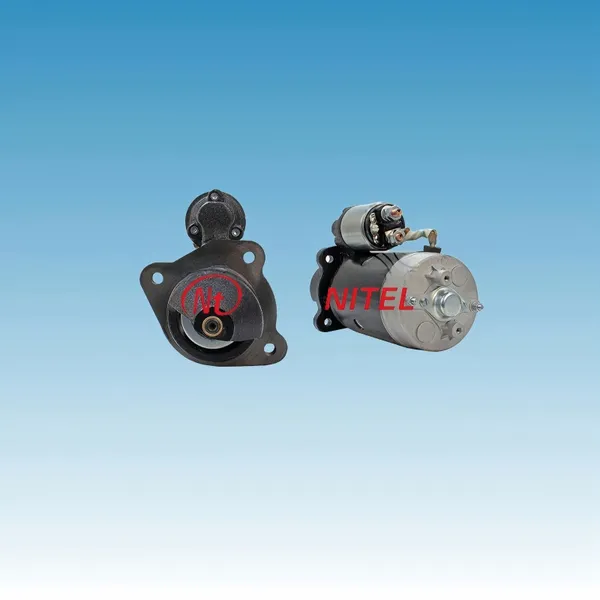
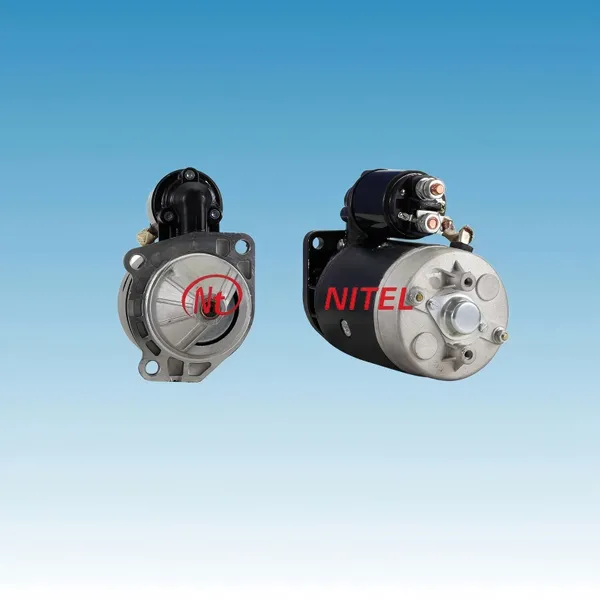
Bosch 0001261015 24V 5.5KW 11T Starter Motor for HOWO A7 WEICHAI VG1246090002 M9T20271 WEICHAI WD12 WD612 EngineUS$ 45MOQ: 20 Pieces
-
Bosch 0001241008 0001261016, 0001261022 24V 5.5KW 11T Starter Motor for HOWO WEICHAI WD615 WD618 612600090293 612600090561 19741N 31501NUS$ 45MOQ: 20 Pieces
-
Bosch 0001241006 0001241015 0001241020 24V 5.5KW 12T Starter for DAF Diesel Engine 0986022260、DAF 1667425、1688625 19741N, 31501NUS$ 45MOQ: 20 Pieces
-
Bosch 0001241005 0001241009 0001241021 24V 5.5KW 12T Starter for MAN D2876 Enginev MAN TGA TGS TGX Truck 51261017228、51262017220、51262017239US$ 45MOQ: 20 Pieces
-
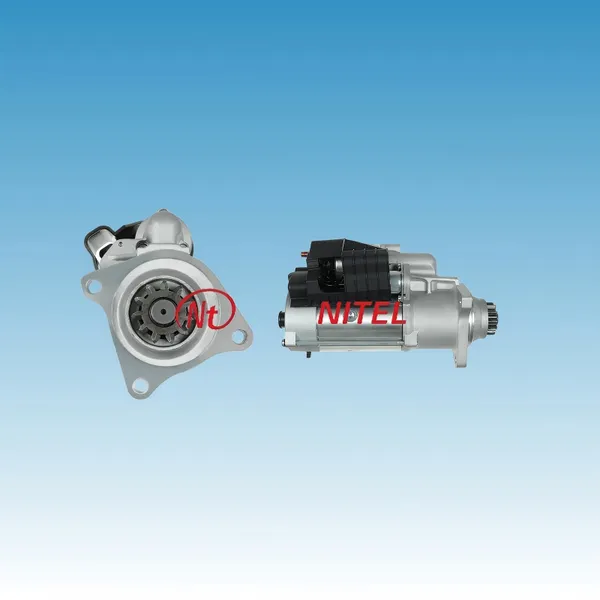
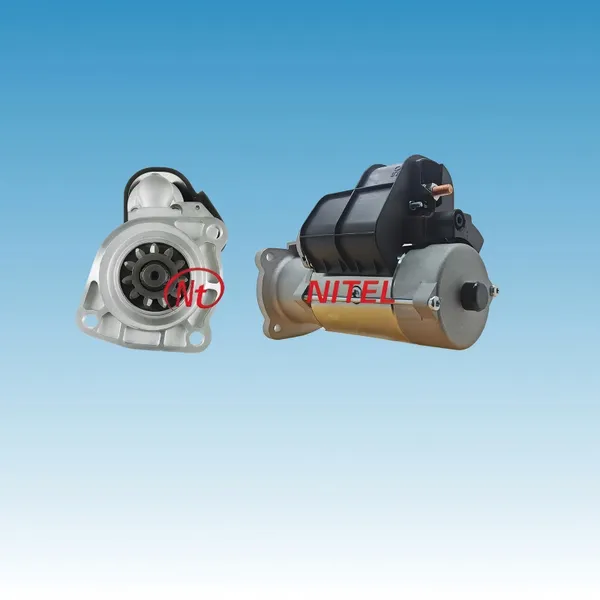
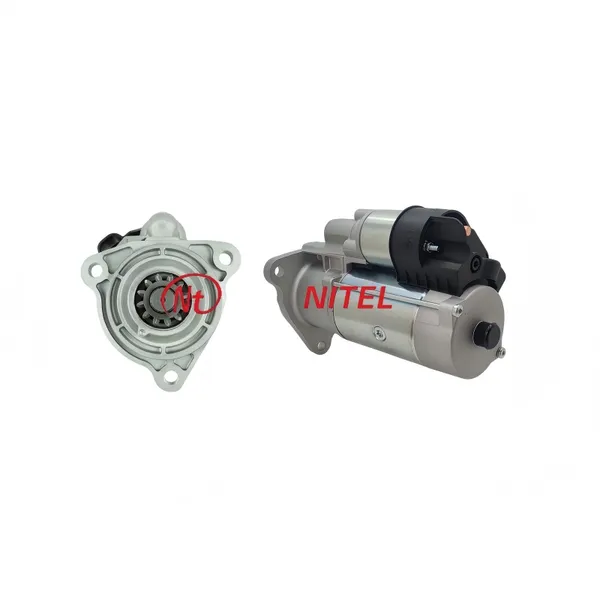
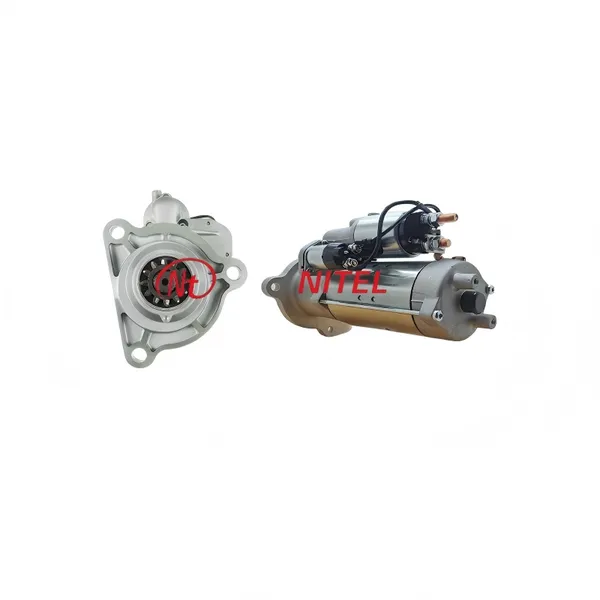
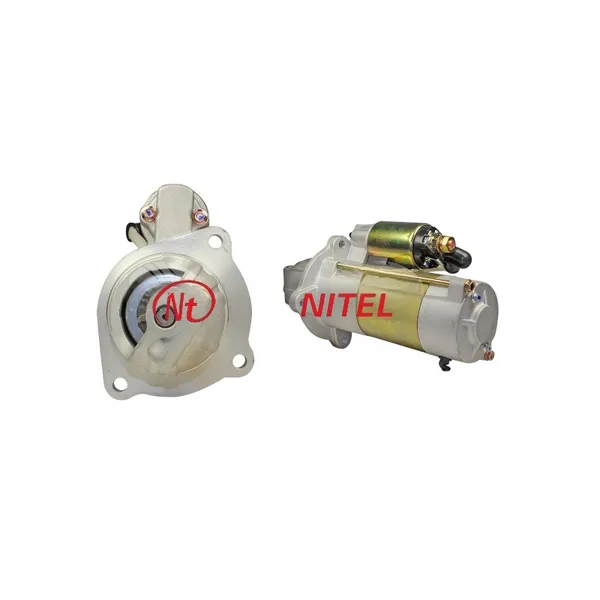
Foton Cummins ISF3.8 5256026, 5263841, 5268413, 5319202F, 5446936, 5585086F, 5585087, 5590995,Starter Motor 24V 4.0KW 10T JACUS$ 45MOQ: 20 Pieces
-
Foton Cummins ISF2.8 5266969 5363153、5295576、5311304 Starter Motor 12V 2.5KW 10T for Aumark OllinTunlandUS$ 45MOQ: 20 Pieces
-
PRESTOLITE M93R3007SE M93R3015SE Starter Motor 24V 6KW 10T for Deutz TD226B Weichai 4110000054228 13031962US$ 45MOQ: 20 Pieces
-
BOSCH Starter Motor for SCANIA Truck 0001371006, 1358639, 1357709, 0986017760, 571168US$ 45MOQ: 20 Pieces
-
Starter Motor 5256984 for Cummins Engine 24V 8.5KW 12Teeh CW 5266532, 5293644, 5346195, C3415537 WAI 1-664-25W 100500405, 370800160, 37E1108010US$ 45MOQ: 20 Pieces
-
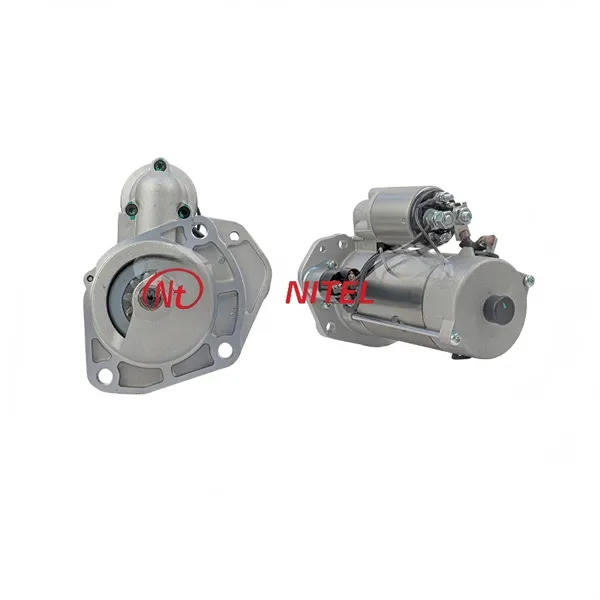
0001231016 BOSCH Starter Motor 10T CW 24V 4..0KW for IVECO 30123N OEM 4892338 Perfect Replacement for Cummins Engine.500059586,US$ 45MOQ: 20 Pieces
-
0001230007 BOSCH Starter Motor 9T CW 12V 3.0KW for IVECO NEW HOLLAND 18374N 500325145, 500338952, 504059251, 5801441814US$ 45MOQ: 20 Pieces
-
BOSCH Starter Motor 0001223016 12V 2.3KW 9T CW for DEUTZ Engine 18951N 01181751, 01182124, 01182382, 01182384, 01183404, 01183599, 01184175US$ 40MOQ: 20 Pieces
-
ZM8048504 M101R 24V 18310 19320 25370 31370 Cummins (Subst. 35261395) 17220 , 17310 , 18310,26220 , 26310, 26.260 - Motor Cummins 6CTAA - 8,3LUS$ 45MOQ: 20 Pieces
-
ZM8048101 35261135 Diesel Parts Engine Starter 12V 12 Teeth Compatible With Cummins ISC 8.3L N17220 23220 26220 26260 17310 26310 CumminsUS$ 45MOQ: 20 Pieces
-
Deutz Starter Motor 12v 3.0Kw 9T CW 0001230006 Fits Deutz-Farh KHD 18232N, 6599N 1180928, 1181976, 01182233, , 0986019020, 0001230014,US$ 45MOQ: 20 Pieces